
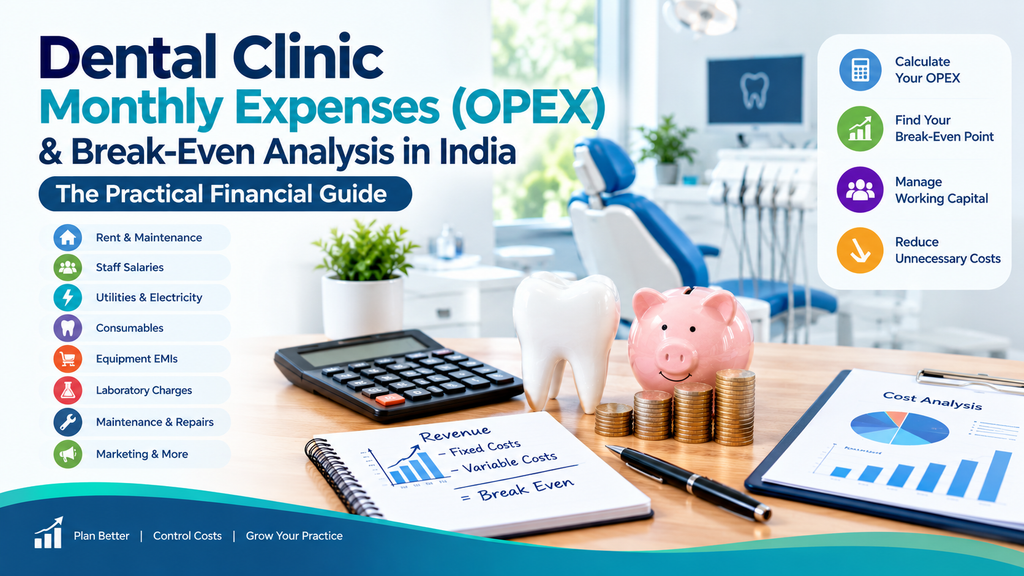
Understanding dental clinic monthly expenses is essential for Indian dentists planning a new practice or improving an existing one. Rent, staff salaries, electricity, consumables, equipment EMIs, laboratory charges, maintenance and licence fees can significantly affect profitability. Calculating operating expenditure (OPEX), maintaining working capital and knowing your break-even point help you make better financial decisions.
1. Why Dental Practices Struggle with OPEX
A dental clinic may generate good revenue but still struggle financially when operating costs are high or patient appointments are inconsistent. Monitoring collections alone is insufficient; dentists must track expenses, cash flow and profitability.
CAPEX vs. OPEX
- CAPEX: Initial investments in dental chairs, RVG systems, interiors, instruments and equipment.
- OPEX: Recurring expenses such as rent, salaries, electricity, consumables, laboratory bills, repairs and marketing.
Before purchasing equipment, review our essential dental instruments list for new clinics.
The Hidden Chair-Hour Drain
Rent, salaries and equipment costs continue even when a dental chair is idle. Cancellations and low patient flow reduce the clinic’s ability to recover these expenses.
2. Dental Clinic Monthly Expenses Breakdown in India
Fixed Monthly Costs
- Rent and maintenance: Commercial rent, building maintenance and common-area charges.
- Staff salaries: Dental assistants, receptionists, housekeeping staff and associate dentists, where applicable.
- Electricity and utilities: Air conditioning, compressors, autoclaves, dental chairs, lighting, water and internet.
- Equipment EMIs: Monthly loan instalments for dental chairs, RVG systems and other financed equipment.
- Software and communication: Practice management software, telephone and internet subscriptions.
Variable and Periodic Operating Expenses
- Dental consumables: Gloves, masks, burs, anaesthetics, restorative materials, disinfectants and sterilisation supplies.
- Dental laboratory charges: Crowns, bridges, dentures, aligners and other outsourced work.
- Equipment maintenance and repairs: Servicing chairs, compressors, suction systems, autoclaves and diagnostic equipment. Keep a reserve for unexpected breakdowns.
- Government taxes and licence fees: Budget for applicable taxes, registrations, establishment-related fees and periodic renewals. Requirements depend on your business structure, location and applicable regulations.
- Biomedical waste disposal: Authorised waste collection and compliance-related expenses.
- Marketing and patient acquisition: Local advertising, online promotion and patient communication.
Consult the CPCB Biomedical Waste Rules and the Clinical Establishments portal for relevant guidance. Check the specific requirements applicable in your state and municipality.
3. Typical Monthly OPEX: Tier 1 vs. Tier 2/3 Cities
The following figures are illustrative planning estimates for a one-chair startup, not official industry averages.
| Expense Category | Tier 1 City (Monthly Range) | Tier 2 / Tier 3 City (Monthly Range) |
|---|---|---|
| Rent & Maintenance (₹0 if owned commercial premise) |
₹0 – ₹39,000 | ₹0 – ₹19,000 |
| Assistant & Receptionist Staff | ₹13,000 – ₹22,000 | ₹9,500 – ₹16,000 |
| Commercial Electricity & Utilities | ₹3,500 – ₹7,000 | ₹2,100 – ₹4,200 |
| Internet, PMS Software & Telecom | ₹1,300 – ₹2,600 | ₹800 – ₹2,100 |
| Equipment Loan EMI (₹0 if self-funded/zero debt) |
₹0 – ₹21,500 | ₹0 – ₹13,000 |
| Local Marketing & Patient Outreach | ₹4,200 – ₹8,500 | ₹2,800 – ₹5,000 |
| Equipment AMC & Repair Reserve | ₹1,700 – ₹3,400 | ₹1,300 – ₹2,600 |
| Licences, Accounting & Compliance Reserve | ₹1,300 – ₹2,600 | ₹800 – ₹1,600 |
| Biomedical Waste Disposal & Misc | ₹1,700 – ₹3,400 | ₹1,000 – ₹2,100 |
| Total Estimated Fixed Monthly Cash Outflow | ₹26,700 – ₹1,10,000* | ₹18,300 – ₹65,600* |
These estimates exclude owner remuneration, income tax, variable consumables, laboratory charges and major unexpected repairs. Actual costs depend on location, equipment, staffing and clinical workload. Licence and compliance reserves are budgeting allowances, not actual monthly bills.
Equipment EMI principal is a cash outflow but is not normally an accounting expense. Distinguish loan principal, interest and depreciation when calculating accounting profit.
Working Capital: Keep a Cash Reserve
A new clinic may take months to develop a consistent patient base. Maintain sufficient funds for rent, salaries, utilities, EMIs and other obligations during slower periods. Avoid spending the entire setup budget on interiors and equipment.
4. How to Calculate Your Dental Clinic Break-Even Point
Break-even occurs when revenue equals the costs included in your calculation.
Break-Even Formula
Break-even revenue = Fixed costs ÷ Contribution margin ratio
Contribution margin ratio = (Revenue − Variable costs) ÷ Revenue.
Suppose monthly fixed costs are ₹88,000 and variable costs equal 20% of collections.
Contribution margin ratio = 1 − 0.20 = 0.80.
Break-even revenue = ₹88,000 ÷ 0.80 = ₹1,10,000 per month.
This simplified example excludes costs not included in the fixed-cost estimate. Add owner remuneration and other relevant expenses if you want a more complete financial target.
How Many Patient Visits Are Needed?
Suppose the average collection per completed visit is ₹1,500 and variable costs average ₹300 per visit.
Contribution per visit = ₹1,500 − ₹300 = ₹1,200.
Break-even visits = ₹88,000 ÷ ₹1,200 = approximately 74 visits per month.
This assumes a consistent average contribution per visit. Actual requirements depend on treatment mix and collection rates.
How Many Procedures Equal Break-Even?
If a restoration contributes ₹900 after direct costs, covering ₹88,000 in fixed costs would require approximately 98 such restorations. Most clinics provide multiple treatments, so a weighted average contribution per visit gives a more realistic estimate.
Clear communication can help patients understand recommended treatment options. Read our guide on how to present dental treatment plans to patients.
5. Chair Cost Per Hour: An Important Financial Metric
Calculate the Cost of an Idle Chair
Hourly fixed overhead = Monthly fixed costs ÷ Available clinical hours
If fixed costs are ₹88,000 and the chair is available for 200 hours:
₹88,000 ÷ 200 = ₹440 per available chair-hour.
This represents allocated fixed overhead, not an additional cash expense caused by every idle hour. Monitor cancellations, chair utilisation and collections per visit to improve efficiency.
6. Five Ways to Reduce Dental Clinic OPEX
1. Optimise Consumable Purchasing
Compare suppliers and bulk-buy frequently used, non-perishable materials where economical. Avoid overstocking, wastage and expired products.
2. Control Laboratory Costs
Compare laboratory quality, pricing and turnaround times. Improve case communication and impression or scanning accuracy to reduce remakes.
3. Manage Electricity and Equipment Maintenance
Maintain compressors, autoclaves and dental chairs. Switch off equipment when appropriate and monitor electricity consumption without compromising sterilisation or patient safety.
4. Improve Appointment Scheduling
Confirm appointments, manage cancellations and schedule procedures efficiently. Review monthly revenue and expenses rather than relying only on patient numbers.
5. Build Patient Trust and Professional Visibility
Consistent communication, ethical follow-up and professional branding can support patient acquisition and retention. Learn why personal branding matters for dentists.
7. Monthly Financial Tracking Checklist
Review these figures every month:
- Total collections and outstanding payments.
- Fixed expenses and variable costs.
- Electricity, laboratory and consumable costs.
- Equipment repair expenses and upcoming licence renewals.
- New patients and marketing cost per acquisition.
- Break-even revenue, profit and available cash reserves.
Remember, clinic collections are not the same as profit. Account for operating expenses, financing costs and an appropriate allowance for your own clinical work.
Need Help Setting Up or Growing Your Dental Clinic?
- Starting a new practice? Explore our Dental Clinic Setup Consultant service for setup planning, budget review and business advisory.
- Want to improve an existing practice? Explore our Dental Clinic Growth Services for business planning and growth support.
Final takeaway: Monitor dental clinic monthly expenses, maintain working capital, calculate break-even regularly and control avoidable costs without compromising clinical quality. A financially sustainable dental practice balances patient trust, clinical excellence and disciplined business management.
Frequently Asked Questions: Dental Clinic OPEX & Break-Even
How much does it cost to run a dental clinic monthly in India? +
How long does it realistically take for a new dental clinic to break even in India? +
What percentage of dental clinic revenue should go toward operating expenses? +
- Commercial rent: 10% – 15%
- Dental materials & lab bills: 15% – 20%
- Staff salaries: 15% – 20%
- Utilities & statutory overheads: 5% – 10%
Are dental lab charges considered fixed or variable operating costs? +
Last Updated on October 13, 2026 by Dr. Anuran Ghosh Mondal
Dr. Anuran Ghosh Mondal is a BDS-qualified dentist, private practitioner and dental clinic owner with 12+ years of clinical experience in India. He is the founder of DentalClinicAlly.com and DentistUpgrade.com and has practical experience in Dental Clinic Business Consulting- dental practice management, patient acquisition, market analysis, branding, marketing and clinic growth.